
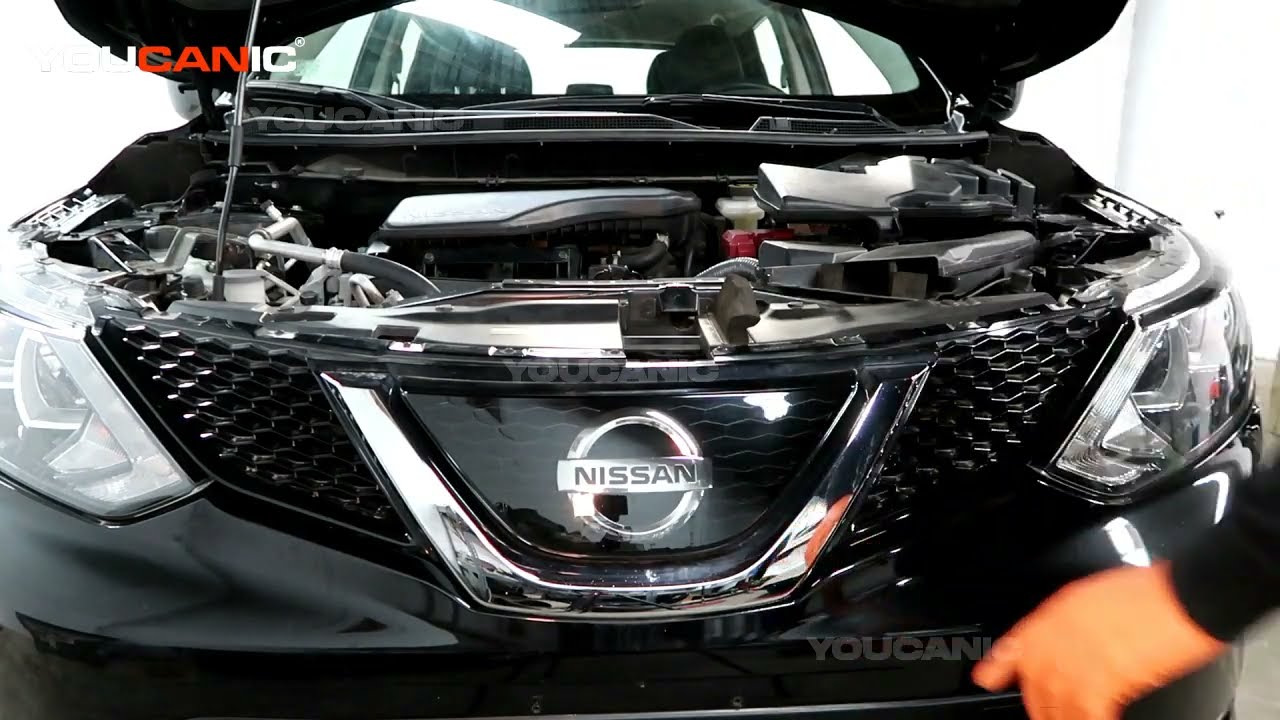

Nissan radar sensors are engineered to keep within amazingly tight tolerances. They must join precisely accompanying the vehicle’s forward trajectory so they can correctly measure distance, speed, and object location. Even a 1–2 millimeter shift can corrupt readings.
Understanding the reason this happens is essential for motorists and repair technicians, especially as ADAS science becomes standard on more Nissan models. Below, we discuss the main reasons radar sensors fail after apparently insignificant bumper impacts.
Radar Sensors Require Millimeter-Perfect Alignment
A light hit to the front bumper can cause:
- Slight deformity of the bumper reinforcement
- Bracket misalignment
- Plastic-abundant cover is shifting improperly
- Minor bending of the sensor escalating tabs
Although these changes may be hidden to the eye, they are enough to start:
- “Front radar not available.”
- AEB system warning lights
- Adaptive cruise control shutdown
Because radar waves need a clear, precise way, any misalignment—even if the abundant looks perfect—can make the system unusable. If you face any kind of issue with brakes, then you can also visit shops for Brake Repair in Hillsboro, OR.
Internal Mounting Brackets Are Easily Bent
Behind the abundant cover, radar sensors are consistently mounted to inconsequential brackets planned for stability, not impact assimilation. Unfortunately, this means they surely bend during low-speed impacts.
Common results include:
- The sensor tilting upward or downward
- A slight abandoned/right shift
- Loosened mounting screws or fissured brackets
Once the angle is off, the sensor cannot correctly “see” the line. Nissan vehicles are specifically sensitive to this cause their ADAS calibration relies heavily on radar accuracy. Even if the sensor itself is not broken, the bracket deformity alone can cause arrangement failure as long as recalibration or replacement is performed by experts like G&D Automotive.
Radar Beams Can Be Distorted by Small Bumper Deformations
Many Nissan models house the radar unit straightforwardly behind the plastic-abundant cover. Radar waves can pass through flexible—but only if the surface is smooth, even, and free from distortions. When an abundant receives a minor hit:
- The flexible may ripple
- Stress marks can form
- Inner surfaces can enhance uneven
- Mounting points shift marginally
These changes cause the radar beam to be uneven, which results in fake readings of distance or speed.
This is why few drivers notice:
- Adaptive cruise denying to engage
- Sudden braking alerts
- Inaccurate forward-collision warnings
Even a miniature internal ripple in the abundant can degrade radar accuracy.
Conclusion
Nissan radar sensors fail after minor bumper impacts cause the technology is amazingly precise, delicate, and dependent on perfect adjustment. For this reason, some front bumper impact—no matter how small—should be examined by a qualified machinist like G&D Automotive who can evaluate sensor alignment, confirm internal honor, and perform proper recalibration.